EU report exposes widening gender gaps in agriculture income and CAP support
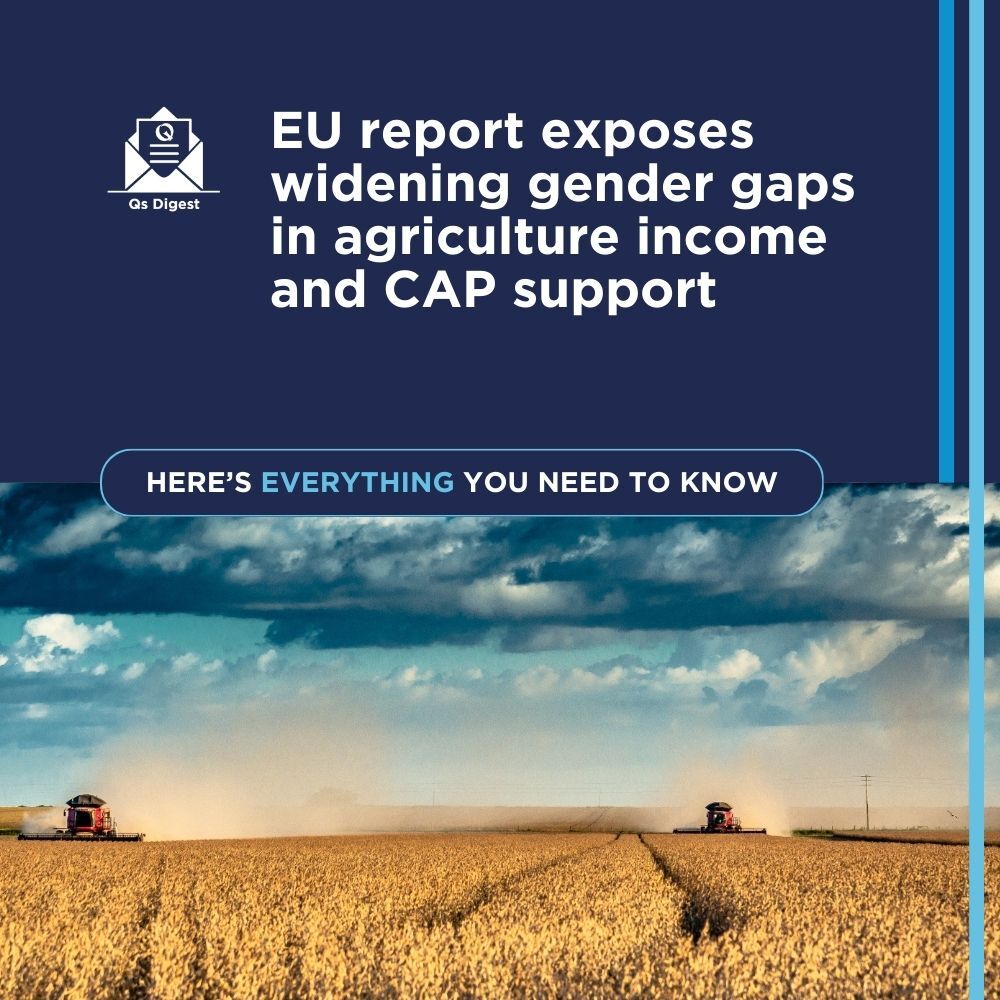
A new European Commission analysis reveals persistent gender imbalances in EU farming, with women managing smaller farms, earning less, and receiving a smaller share of CAP funding, prompting calls for targeted reforms and support measures.
A European Commission analysis released alongside the United Nations’ International Year of the Woman Farmer has cast fresh light on persistent gender imbalances in European agriculture and widening income disparities between farms run by men and those managed by women. According to the report by the European Commission, women remain underrepresented in farm leadership and continue to receive a disproportionately small share of agricultural support under the Common Agricultural Policy (CAP).
The brief underscores that the EU farming sector is "characterised by gender imbalance", with women managing roughly a third of holdings overall but with sharp variation between member states. The commission notes that the proportion of farms run by women ranged from single figures in some countries to over 40% in others, and that more than two thirds of female-managed farms are concentrated in Romania, Poland and Italy.
Demographic patterns compound the imbalance. Female managers tend to be older than their male counterparts and are less likely to be young entrants, although the share of women among new entrants is higher than in the overall farming population in most member states. The report also finds that women generally have lower formal agricultural education and are substantially less likely to take part in vocational training than men. Across the EU, women more often operate smaller holdings, both physically and economically.
Economic outcomes mirror these structural differences. Average farm income per worker on holdings managed by women was substantially lower than on those run by men; the commission reports an average of €18,700 in 2023 for female-managed farms, a gap of 42% compared with male-managed farms. The brief warns that the income shortfall widened in 2023 after years of gradual narrowing. Women also tend to rely less on credit to finance assets than men, limiting opportunities for investment and expansion.
Disparities in CAP distribution are pronounced. Using data from the Database on interventions and beneficiaries and the Annual Performance Report, the commission found that while women account for roughly 31% of CAP beneficiaries, they receive only about 15% of CAP payments; men constitute about 63% of beneficiaries but receive roughly 69% of the funding. The report attributes much of this gap to the link between payments and farm size, given that women more often operate smaller farms and consequently receive lower average aid.
Some member states have moved to narrow the imbalance by offering targeted top-ups and higher rates of support to female farmers, particularly younger women, under CAP measures. According to the commission, Spain and Ireland have implemented specific incentives aimed at increasing women’s access to income support and capital investment schemes. At the EU level, the commission has launched a Women in Farming Platform intended to bolster women’s participation in agriculture and align policy with broader gender-equality commitments.
The analysis places the sector’s gendered gaps in the wider context of persistent pay and pension differentials across the EU. Government figures show that women in the labour market continue to earn significantly less per hour than men, a gap that has changed little in recent years, and the European Parliament has urged an action plan to eradicate pay and pension gaps. The commission concludes that addressing structural barriers, land access, finance, training and decision-making power, is essential if the EU is to achieve a fairer and more resilient agricultural sector: "If we want a truly fair, competitive and future-proof agricultural sector in the EU, addressing these structural imbalances is absolutely essential."