Shifting the landscape: unlocking female leadership to accelerate AgriTech innovation
As women increasingly assume key roles in AgriTech leadership, experts highlight the need for targeted support, infrastructure, and investment to overcome persistent biases, transforming the sector for resilient, innovative, and sustainable growth.
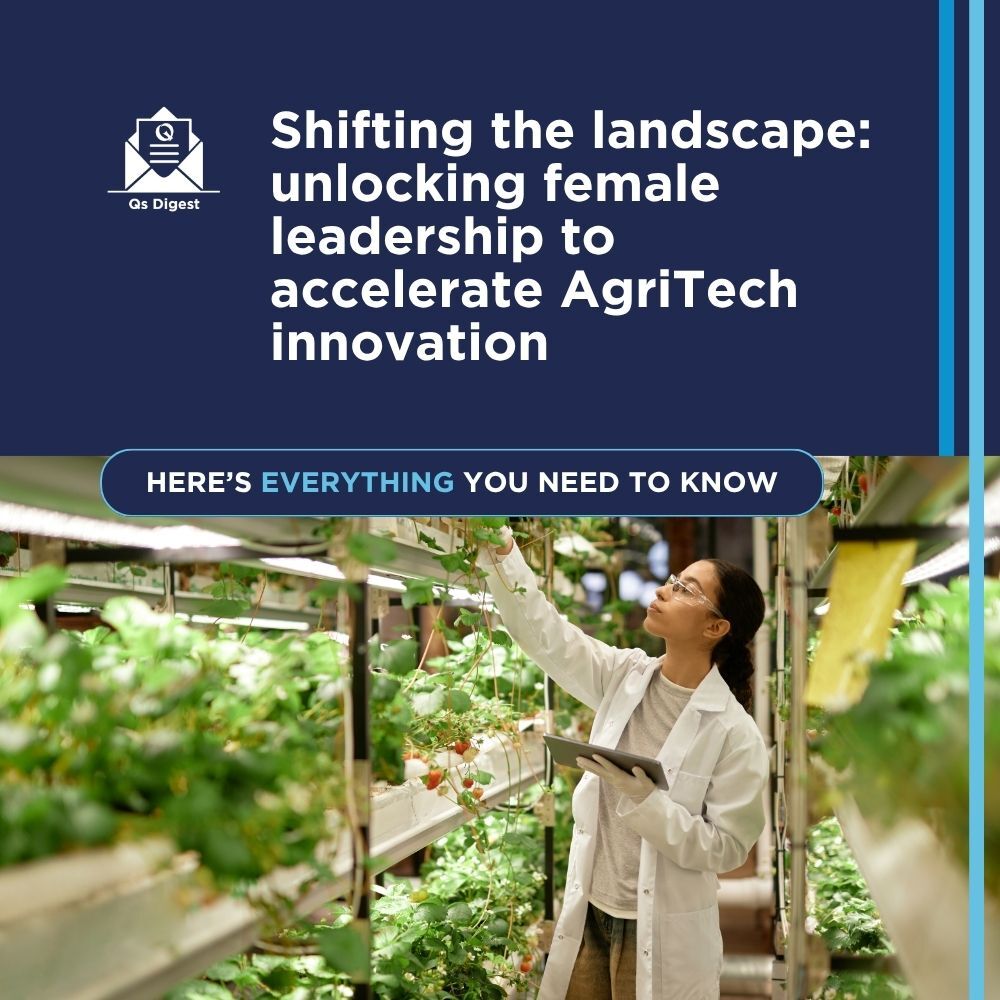
AgriTech’s public image, sensors, drones and data platforms, occludes a quieter but decisive arena: the leadership that turns prototypes into dependable systems. According to EU-Startups, women are increasingly shaping those leadership roles, yet face persistent structural obstacles that limit their visibility and influence. Industry observers also point to widespread gender bias and weaker networks as barriers that constrain many women's career progression in the sector.
Engineering crops into reliable, repeatable outputs requires leaders who can navigate biology, hardware and software simultaneously. As EU-Startups notes, the work demands systems-level thinking rather than single-discipline brilliance. Women have opportunities across many technical and managerial functions in AgriTech, from precision agriculture roles to agricultural robotics and biotech, areas highlighted by WomenTech as natural pathways for career development.
Trust in agricultural innovation is earned through rigorous validation and operational robustness, not headline-grabbing demos. EU-Startups argues that leaders must translate biological nuance into machine logic and embed that logic in firm quality controls and governance. Development researchers stress that support and training must be tailored to community realities and delivered at the right moments to build lasting capability.
Capital remains a choke point. EU-Startups reports that female founders more often struggle to attract later-stage funding, a problem WomenTech and other commentators trace to how risk is judged and to decision-making networks that still favour certain profiles. Multiple analyses show sponsorship, active, sustained backing from experienced investors or industry figures, significantly improves scaling prospects for women-led ventures.
Programmes that connect founders with mentors and committed investors can change outcomes. EU-Startups references the EIC Women Leadership Programme as one example of matchmaking that goes beyond publicity to sustained engagement, and WomenTech coverage suggests that such targeted initiatives help close skills gaps and expand professional networks crucial for growth.
If Europe hopes to build a resilient AgriTech ecosystem, support must be practical and long term. EU-Startups calls for investment in pilot production lines, regulatory preparedness and validation facilities rather than cosmetic measures. Development guidance further emphasises that interventions should reflect local social norms and be designed to convey the right messages to build leadership capacity where it will be deployed.
Expanding female leadership in AgriTech has wider payoffs. WomenTech and related analyses indicate that diverse leadership teams tend to drive innovation, improve community engagement and increase consumer trust, while also reinforcing sustainability and crisis resilience. These gains arise because different perspectives shape product design, regulatory approaches and supply-chain thinking.
Shifting the sector’s trajectory therefore requires more than raising profiles: it requires changing how technologies are de-risked, governed and financed so that those who can demonstrate the discipline to translate biology into operational systems are supported to scale. According to EU-Startups and complementary industry sources, creating structured sponsorship, building validation infrastructure and aligning investment with the realities of biological systems will be decisive in enabling more women to lead the future of AgriTech.